Wholesale & Trade / August 18, 2026
How to Merchandise Wall Art in a Small Retail Space
By Rock Paper Scissors
Use a small wall, print bin, or tabletop fixture effectively with clear grouping, visible prices, framed examples, rotation, and staff-ready stories.
Shop Rock Paper Scissors on Faire
Article guide
The short answer: give wall art one clear display zone, organize it into a story customers can understand quickly, and show at least one finished example. A small space performs better when it looks edited than when every available design competes for attention.
Choose one job for the display
Decide whether the zone is primarily for browsing, inspiration, gifting, or explaining a collection. A print bin supports browsing. A gallery wall supports inspiration. A small tabletop group can support a seasonal or gift story. Combining all three jobs in a few feet usually creates clutter.
Three useful display formats
| Format | Strength | Watch for |
|---|---|---|
| Gallery wall | Shows the finished look and creates visual impact | Overcrowding, weak spacing, hard-to-find packaged stock |
| Print bin | Lets customers browse many designs in a small footprint | Hidden prices, damaged corners, categories that are too broad |
| Tabletop fixture | Easy to refresh and connect to nearby products | Too many layers and no obvious front-facing anchor |
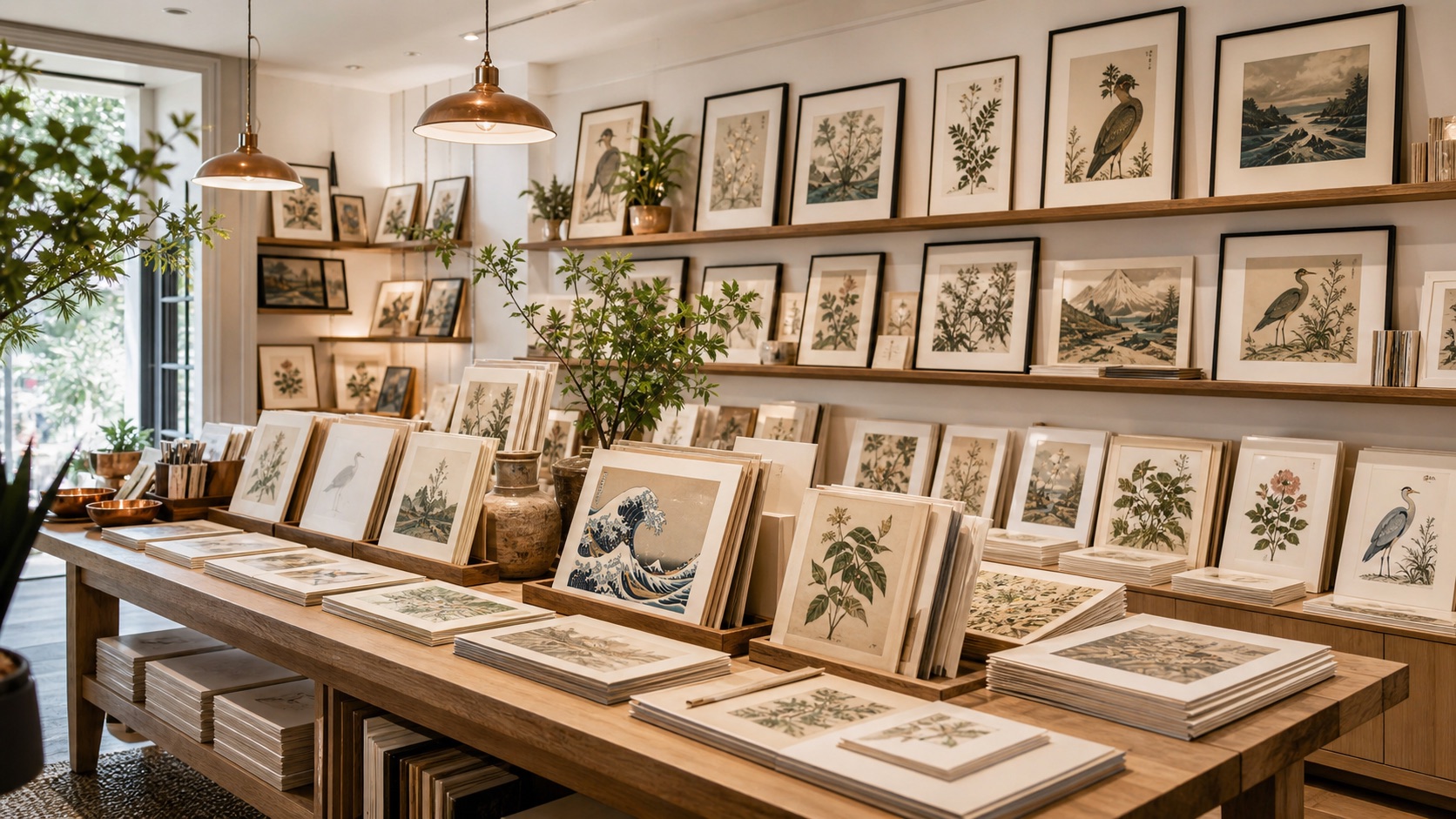
Group for fast understanding
Customers should be able to name the relationship between nearby pieces: botanical studies, graphic color, local history, birds, modern masters, or another literal theme. Color can support the group, but color alone should not force unrelated subjects together.
Place one strong anchor at eye level or at the front of the bin. Add supporting designs that share the theme without looking identical. Use a short sign that names the story in customer language.
Show the finished result
A framed sample answers questions about scale and finish that packaging cannot. The sample does not need to represent every frame choice. Its job is to help the customer imagine the artwork at home and understand that the packaged print becomes a finished object.
Make prices and stock obvious
- Place the price where customers can see it without handling every print.
- Use dividers or labels in deep bins.
- Keep back stock separate from the customer-facing browse area.
- Give staff one location for replacement stock.
- Remove damaged packaging promptly.
Rotate with a reason
Do not rearrange the display so often that you lose the ability to learn. Keep a simple record of which designs were front-facing and for how long. Rotate a few positions at a time, then compare sales and customer comments. A design hidden behind ten others has not received the same test as the anchor.
Give staff a twenty-second story
For each group, write one sentence about why the art belongs together and one sentence about who might enjoy it. That is enough for a helpful conversation without turning the interaction into a lecture.
Explore the wholesale ordering paths when you are ready to build a focused store assortment.